Wednesday, March 2, 2016

FAQ's on Teaching in Japan

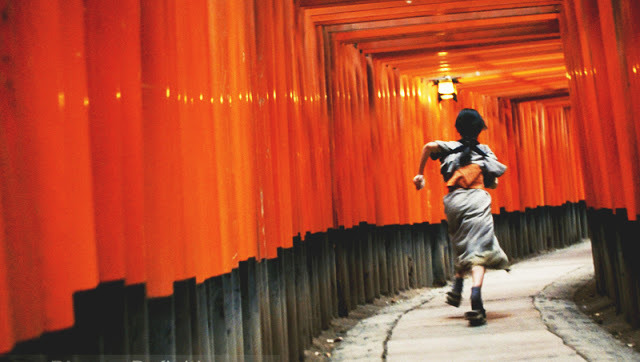
 A Japanese Drama: Great Teacher Onizuka
credits: https://www.youtube.com

Side notes: I haven't written as regularly as I used to. I'm leaving Japan soon so I'm bit busy preparing things. I have tons of topics I want to write but I'm not sure when I will have the time. For now, I'll do a series of FAQ's about to address some questions I usually get from emails.  

Let's start with the FAQ's about teaching English in Japan:

1. How can I teach English in Japan? 

To be an English teacher in Japan, you'll need at least two things.

First, you'll need a Bachelor's Degree. For native speakers, any degree is accepted. For non-native speakers, you have to work on having an Education degree and ESL Certifications.

Second, you'll need to apply for English teaching jobs. Here's a post I've made about the Best Companies to Get Teaching Jobs in Japan.

2. I am from (insert a country not considered native English), can I get a teaching job in Japan?

I have no straight answer for this question.

Honestly, it is hard to get a teaching job if you're not a native English speaker. I know a few people from India, Pakistan and Indonesia who are teaching in private kindergarten schools. However, the benefits and workload are horrible.

I've had some Filipinos asking me if they can get a job here. Here's the answer: Yes, if you are qualified. Get some experience and get a TESL or CELTA certificate.

3. How much is the salary of English teachers in Japan? 

Monthly salary ranges from 150,000 Yen to as high as 350,000 Yen. It depends on the nature of teaching, your nationality and the company you're working for.

To live comfortably in Japan, you would need at least 200,000 Yen. So, if you have job offers lower than 200,000, ask your employer to provide housing for you.

Here's a post on How Much Can You Save as an ALT in Japan?

4. Can I go to Japan as a tourist then find a job there? 

No one's stopping you to do this but I wouldn't recommend it. You'll have a hard time finding an employer who would sponsor your working visa. Another possible scenario is you'll be taken advantage of by your employer. Worse, you can be deported for not having the right visa.

5. Do I need to learn Japanese to get a teaching job in Japan? 

Not necessarily but knowing some Japanese can greatly help you in everyday living. It would also help you in your work.

6. Are Japanese students easy to teach? 

When it comes to discipline, Japanese students are easy to manage. They are mostly well-behaved. In schools, the Japanese teachers will be the one responsible for classroom management.

The harder part is how you'll teach English in a way they'll understand. You will need tons of creativity so your students can understand you


7. What should I prepare before coming to Japan as a teacher? 

Materially, you can find most of the things you'll need here. Don't bother bringing your whole closet with you.

Working in another country will always require you to be more open to another culture. You have to be ready for culture shock and homesickness.

Be physically fit too. You don't want to get sick in another country.

And oh,  polish your grammar. Japanese students are highly-focused on grammar rules.

If you want to know more details on teaching in Japan, here's an e-book I've written two years ago:
Jumpin' to Japan .


If you have other questions, feel free to send me an email.

Good luck!
Thursday, February 25, 2016

A Break-Up Letter to Japan

credits: https://storeyed.wordpress.com/


Dear Japan,

I'm sorry but I have to say "Sayonara" soon.

I wish I could have been gentler and less direct, but you know me. I don't like beating around your lovely cherry blossoms tree.

Please believe when I said that "It's not you, it's me."

You, Japan did nothing bad to me. If anything, I should be grateful for the 4 years I've been here. You attracted me with your amazing anime even before I hit puberty. You excited me to the promise of a comfortable life with you. You let me experience your sensational 4 seasons. You never kept me from meeting wonderful people. You encouraged me to discover my love for cooking and rediscover my passion for writing. You showed me that life can be lived safely, conveniently and comfortably. Staying with you helped me grow in my faith and helped me defined my values more. You have been nothing but great to me, Japan.

But living with you is like summer romance. It's nice for awhile. But at some point, summer has to end and give way to fall. We can't stop the passing of time. When I came to you, I was just 26. I was a know-it-all, ever curious big girl who wanted to see how it is to be with you. But I'm on my 30's now and I feel like this is the best time to go and move on. I can't be that 26 anymore. Whether I like it or not, I have to grow up and face life's realities.

I have to face that death is real. I lost a grandfather last year without me saying goodbye to him. When he died, I realized that during my stay in Japan, I rarely talked to him. My grandmothers are already in their late 80's and 90's. I want to spend sometime with them in their last years. They've been great grandmothers to me. If I stay with you, I might not be able to say goodbye to them. I'm sorry, they're more important than what you can give me.

I have to face that I'm now married. My husband is a wonderful man. He waited for me for 11 years. It's about time that I should be the one to adjust to his wishes. Staying here with you feels unfaithful. I don't want to trade the comforts you're giving me to the life my husband is planning. He loved me when you wouldn't accept me. And I believe he loves me enough not to provide me with my needs.

And I have to face that I'm not meant to be here with you. I'm too restless, too ambitious and just too much for your gentle constant character. I like to try other careers but I can't do it here with you. I wanted to excel as a teacher but you just wouldn't let me. I tried being happy just like this but I can't. I told you, it's not you, It's really me.

I'm sorry for the times I've taken you for granted, I'm sorry if I sometimes complained. I'm sorry if I can't stay with you. I'm sure you'll find other loves who would love you in return. But though you're not my forever, you'll always be my sweet sweet summer romance.

Saying Goodbye with Love,
Purple Pen


Wednesday, February 10, 2016

A Day in a Japanese School

Elementary students walking to school, Japan
photo credit: Everything, Japan

Ohayou Gozaimasu!

How does a typical day in a Japanese school go?

Based on my experience and on research, Japanese students and teachers spend way more time in schools than other countries. They spend really way more time and days in the school than in their houses.

Schools officially start around 8 am and officially end at around 3 pm. But this is only the "official" time. In reality, students come to school as early as 6:30 am for club practice. Don't be surprised seeing students all sweaty and dirty even before class starts.

Before Actual Classes

As I've said, some students have club practice before 8 am. Five minutes before 8, all students must be in their classrooms. There, they'll have either homeroom time or individual reading time. This usually lasts for 20 minutes.

A few days in a month, this 20-minute pre-class time is allotted for student assembly. If you're working in schools and you can't find anyone during this time, they're probably in the gym for the assembly.
Related Posts Plugin for WordPress, Blogger...